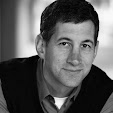
Saturday, April 28, 2007

SmugMug's Don MacAskill and Utility Computing

Surfing has its benefits. I tripped over SmugMug CEO Don MacAskill's Blog today. SmugMug is a rough competitor to Flickr and other (lower-grade) photo archiving sites. They archive about 130,000,000 photos right now. And They use Amazon's S3.

This is a perfect commercial example of server-less IT I spoke about last week. And it's proof that the economics of Utility Computing are compelling. MacAskill estimated that he's saving about $500,000 anually by not buying and managing his own storage (he computes the number in his blod). And he expects that number to increase. Amazon has taken the traditional approach to managing storage (S3) and computing (EC2) and applied a utility automation paradigm -- enabling a completely new cost model. How else could they be offering such pricing to users?

What's this going to enable in the future, Read on: MacAskill's other Blog: "Amazon+2 Guys = The Next YouTube". (aka the server-less web service!)

I gotta keep wondering: When is corporate IT going to catch onto this utility computing approach, and make "compute clouds" out of their own stuff?

Sunday, April 22, 2007

Prediction: Server-Less IT Services

Folks like Greg Papadapoulous at Sun say that a small number of companies will invest in creating a huge infrastructure of computing power. (See my blog of 12 Jan. 2007). And folks like Amazon are already doing so with their Electronic Compute Cloud (EC2), while others like Google, eBay, Yahoo etc. are likely to follow.

To Wit: Carriers like Verizon have announced intentions to do so, and SalesForce.com recently announced its existing ability to host more than just CRM applications. But what will really signal the shift toward "compute cloud" use will be the third-party vendors that make use of these resources.

So Here's my prediction: As the infrastructure vendors build-out their compute and storage farms, a new class of computing "brokers" will emerge. These players will adapt the needs of users and IT departments to make seamless use of these compute and storage "clouds". Everything from backing-up your laptop for pennies a GB, to hosting and failover services that don't own a single server.

And here's proof it's happening, with "mashups" of the following just around the corner:
  • JungleDisk: offering a simple windows interface to allow individuals to create a "web drive" onto Amazon's S3 storage
  • Weoceo: offering a product that allows existing servers to "overflow" peak computing needs onto Amazon's EC2 cloud
  • Enomalism: providing services to provision and migrate virtual "elastic" servers, even onto and off-of the Amazon EC2 cloud
  • Elasticlive: which essentially provides virtual hosting services - as predicted - (and works with Enomalism, above). Plus, they charge by the "instance-hour", not by the server type!
  • Geoelastic: a beta group of "global hosting providers" who will be creating a "global elastic computing cloud" and presumably balancing loads between physical centers.
  • Distributed Potential: beginning to deliver pay-per-use grid computing capacity (powered by Elasticlive and Enomalism technologies, above)
  • Distributed Exchange: Also powered by (and presumably founded by) ElasticLive and Enomalism; claiming to "broker" excess compute capacity between providers
  • Dozens of 3rd-parties creating even more applications on S3
The question is, how quickly will small- to medium-sized businesses feel comfortable outsourcing their IT needs to a service that itself may not own any physical servers? What security, compliance and privacy issues might arise? My gut tells me that these are merely details that will be overcome as the new economics of this model crushes the existing economics of owning your own iron.

Lastly, from somewhat of a self-serving perspective, Cassatt essentially creates a "cloud" out of existing resources within corporate IT. At that point, shifting loads between "clouds" (internal or external) becomes a simply policy-based procedure.

Thursday, April 19, 2007

Moving Virtualization Up a Notch

I had the opportunity to speak the other day with Dan Kusnetzky, who interviewed Cassatt for his ZDnet blog which reports on virtualization trends. And boy, he really gets the trend.

Right off, he started with observing that "virtualization" isn't just one thing (Consider: Hypervisors, zones, containers, LPars, network VLANs and virtualized storage). We also quickly observed that virtualization probably isn't an end-game-in-itself for IT. Rather, it represents the most critical enabler that will ignite transformation in the IT industry.

That transformation represents a new way to look at managing IT: Today, we have specialized hardware, software, HA/failover software, monitoring & performance analysis systems, and dozens more. Tomorrow, the transformation will look like managing all of these systems holistically, much the way an Operating System manages components within a server. The automation will be technology agnostic, made possible through virtualization. A number of Dan's earlier interviews all point to this inevitability as well.

He had a bunch of great observations, but the last I liked best: "It's important to take the broadest possible view and avoid point solutions. From this vantage point, a failure of some resource must be handled in the same way as any other condition that causes the configuration to no longer meet service level objectives.
"

For me, the takeaway from the conversation was something I've said before: take the "long view" on implementing virtualization... it may yield you quick HW savings today, but if its automated in an "IT-as-utility" context, its future savings will dwarf what the industry is seeing now.

Friday, April 6, 2007

D'oh. Turning off idle servers

A question just dawned on me. Data centers automate service-levels according to policies... like "always make sure application X has priority" or "always keep server utilization at-or-above Y". So, why not treat power consumption the same way?

Here's what I mean: there are times when server use is low - like during weekends or during the evening. There are also "events" (like the power emergencies we tend to get here in California) where you'd like to minimize power use when your electrical utility tells you to.

So I'm thinking - why shouldn't data centers respond to electrical cost/availability/demand the same way they respond to compute availability/demand? When "events" happen, we turn off the office lights, right?

It turns out that power companies (like PG&E here in Sunny CA) have "traditional" programs to encourage energy efficiency (like rebates for efficient light bulbs, and even efficient servers). But they also have special demand-response programs and incentives for firms that react to electrical demand during "events" by additional short-term reductions in power use (like turning off lights & AC).

Couple that with server automation software, and you've got a combination that's pretty neat: Data Centers that can do things like turn-off low-priority servers, or perhaps move critical applications to other data centers during power events. Cassatt's identified a couple of interesting scenarios:

  • Low-priority servers automatically powered-off during power "emergencies"
  • Standby servers that remain powered-off ("cold") until needed
  • "Follow-the-moon" policies where compute loads are moved to geographies with the least-expensive power
  • Policies/direction to use the most power-efficient servers first
  • "Dynamic" consolidation, where virtual machines are constantly moved to achieve a "best-fit" to maintain utilization levels (minimizing powered-up servers)
Our initial conversations with PG&E showed that practically no data center customers employ this technology yet, even though PG&E offers programs to reward (with rebates/incentives) this sort of activity. BTW, there are any number of other utilities that encourage energy efficiency, e.g. the Consortium for Energy Efficiency.

If building operators can automatically turn off non-critical lights and HVAC systems during electrical emergencies, then why don't data centers?

Sunday, February 25, 2007

Blog Tag

Well, I got tagged (not the graffiti type) by Steve Wilson. Now it’s my turn to reveal 5 things-you-don't-know-about-me, and then tag 5 more unsuspecting-yet-interesting folks… But first, I had to do a bit of the pedigree/ancestry tracing to see where this tagging all began:

Steve first got tagged by Rich Green (a former colleague; and prior to that, a former colleague); Sin-Yaw Wang tagged Rich; Hal Stern tagged Sin-Yaw; Mary Cay Kosten tagged Hal. Then the trail went cold... Mary Cay’s original tag was from behind Sun’s Firewall, so this was a dead-end.

So I took another track from someone else I know: Jonathan Schwartz was tagged by James Governor (of RedMonk, a cool analyst group I’ve worked with in the past); James was tagged by Jeff Pulver. Ahh. Jeff points to the "Root" of Blog Tag pedigree, 3 orders-of-magnitude better/bigger than mine, residing at Solo SEO ... clearly indicating that some folks have way too much time.

Anyway, here goes the whole point of the thing:

  1. I once sailed 1,300 miles from Myrtle Beach SC to Tortola, BVI – with no electronics onboard except a UHF radio and a Timex digital watch. There were 3 of us onboard for 10 days (fortunately two of us knew how to use a sextant). It was one of the most memorable times of my life, being at the mercy of the elements, but having ‘science’ in our back pocket. We made landfall within a mile or so of our target… You gotta read the book “Longitude” to appreciate how important this form of navigation was.
  2. I was a product of the Reagan defense-spending era – my first job (just out of engineering school) was working for a defense contractor designing and building hardware-based real-time adaptive optics and wavefront correction systems. Next time you hear about DoD blowing planes out of the sky with lasers, think of me. (I think that’s all I’m allowed to say about that)
  3. I’d rather be renovating a bathroom, laying tile, or for that matter, building a house. There’s something intensely gratifying about building something permanent/durable.
  4. I wrote a program (circa 1979) in Basic on a Commodore PET with 16k of RAM that played Solitaire. Yes, just 16k. When I finished, there wasn’t enough space to actually execute it. This was perhaps my finest (and final) foray into software. Unless you consider writing FORTRAN batch jobs using punch-cards on a Sperry/Univac.
  5. I started building a historically-accurate plank-on-frame scale model of Lord Trafalgar’s flagship, HMS Victory, back when I was in high school. I put 18 months into it and got as far as building the hull. Then life intervened. Once the kid(s) are out of school, I burn-out in High Tech, and I get over that “I’ve gotta build a house” thing, the HMS Victory is how I plan to occupy my remaining time in the Rest Home.
And now, the Tag-You're-It list (which isn't so easy when most of your friends don't yet blog): Ashesh Badani, Rich Sands, James Urquhart, David Gee, and Vinay Pai.


Sunday, February 18, 2007

Virtual Infrastructure Diversity... and the Need to Manage it.

I can't take credit for the following observations... They were simply handed to me by one of Cassatt's best account executives, who spends endless days speaking with CIOs and operations personnel who manage huge, diverse data centers - and who frequently miss these important facts. He's noted that "Virtualization" is being inaccurately subsumed to mean the software hypervisors purveyed by VMware.

However, the Truth is that virtualization is multi-vendor, multi-technology, and inherently heterogeneous. So: How will these diverse technologies be managed in the future? Here are some observations:
  1. People are confusing ‘Virtualization’ with VMware (but remember, there are more types of virtualization than just hypervisors for software!)
  2. VMware’s scope is limited to X86 Platforms. Most organizations have more than X86.
  3. There are other types of Virtualization within other platforms (Example: Mainframe LPARs, Solaris containers/Zones, HP VPARs).
  4. There are even Virtualization alternatives in X86 (XenSource, Xen/RHEL, Xen/SuSE, and SWSoft Virtuozzo and others).
  5. There are different types of Virtualization (JVM, VLANs in the network domain, SAN & NAS in the storage domain, not to mention Incipient and 3Par).
  6. VMM Virtualization is an OS feature and it’s price will be commoditized to $0 over time. Evidence:
    - Historically LPARs came with MVS
    - Sun does not charge extra for Containers/Zones
    - IBM AIX & HP-UX don’t charge extra either
    - JVM’s are free.
    - VLAN-ing comes built-in into Switch Firmware
    - You can get NAS for free or pay for specially-tuned version in Proprietary Hardware (NetApps)
    - Watch out in the SAN-space but it will be interesting to see where that goes with iSCSI and 10Gig Ethernet etc.
  7. A comment on X86 VMM-pricing:
    - Red Hat will deliver Xen for free in RH5
    - SuSE will deliver Xen for free in SuSE 10.x
    - Intel supports it for free in Intel-VT chips
    - AMD supports for free in their Pacifica chips
    - XenSource costs 25% of VMware and will eventually be acquired by somebody who will give it away for free as part of something else
Thus we see that there are nearly dozens of types of "virtualization" that need to be managed collectively - many of them are already present in data centers, and many will be available for free (or nearly so) in the near future.

This is the next impending management crisis - management, automation, and optimization of virtualized computation, containers, storage, and networking.


Wednesday, February 7, 2007

Postcards from IDC’s Virtualization Forum 2.0

I just attended the IDC analyst conference yesterday in New York. In some sense, the big news was simply how pervasive virtualization is becoming, and how many different technology sources there are. And most interesting, there was lots of talk about *managing* virtualization, not just using it for consolidation.

John Humphreys (Enterprise Computing) opened with some riveting statistics:

  • 62% of VM users are looking for a “unified tool”
  • 45% of servers planned for installation next year will be virtualized
  • 23% is the average savings being reaped from HW, power and facilities
  • 70% of IT costs still reside in operations... not in hardware or software.

In addition, he had the foresight to refer to VMs as “the new atomic unit of management.” Hmmm. Right up Cassatt’s alley.

Finally, under “challenges”, one of the big bullets was “How can you consolidate/manage across the DMZ?”... which I found interesting. True, it’s a growing issue, but frankly, with automated network configuration, Collage already manages virtual (and physical) resources across a number of virtual networks.

We also spoke 1:1 with analysts Matt Eastwood (VP, Enterprise platforms), Michelle Bailey (Datacenter Trends), and Al Gillen (VP, system software). Overall, they confirmed the themes that Virtualization is pervasive, and the challenges were becoming how to manage this new technology. Topics of note:

  • Managing across networks (as above)
  • Parameterized & “mass-produced” provisioning of VMs
  • Managing a virtual enterprise across geographies
  • Justifying economics beyond hardware savings

Besides the better-known technologies (i.e. VMware and Xen) there were also some interesting virtualization options:

  • Trigence: which has an interesting “encapsulation” technology; they don’t use a hypervisor, per se, but rather encapsulate an application, plus all relevant files/libraries, etc. so it’s completely portable
  • SWsoft: which has a unique virtualization approach which, if you only care about one OS, gives you high performance and a huge degree of consolidation
  • HP and IBM: both hyping their versions of self-managing blade systems.
  • IBM has also announced their Secure Hypervisor (sHype) product, that may be incorporated into 3rd-party hypervisors.

From a purely selfish perspective, Cassatt is pretty well-positioned to help manage/automate an upcoming need: as the Virtualization market matures, more datacenters will need a vendor-neutral way of managing across virtual and physical domains, pooling resources, and guaranteeing service levels.